Have you ever recorded a podcast episode only to realize your voice sounded muffled or distant, and you spent hours trying to fix it with fancy software? I remember the first time I hit the record button and instantly felt that sinking feeling—my voice was all over the place, and I had no clue why. It was a frustrating experience, one that made me question whether I needed a more expensive mic or just better editing skills.
Why Picking the Right Microphone Is a Game-Changer
As someone who’s been through countless trial-and-error sessions, I can tell you that your microphone is the backbone of your voice quality. Whether you’re streaming, recording a podcast, or just chatting with friends, the difference a good microphone makes is astonishing. But here’s the catch: with so many options out there, it’s easy to get overwhelmed or, worse, settle for a subpar mic that hampers your voice clarity.
Is All That Gear Actually Worth the Hype?
Early on, I made a classic mistake—thinking that dumping a ton of money on the most popular model automatically guaranteed success. Turns out, I was wasting hundreds on gear that didn’t align with my needs. A detailed review from another creator revealed that understanding your specific use case is *far* more important than chasing brands or trendy features.
If you’ve ever felt confused about choosing between a USB microphone or an XLR setup, you’re not alone. I’ll walk you through the difference and help you find a setup that truly works for you. Ready to stop guessing and start voice recording with confidence? Let’s dive into what makes a mic stand out in 2024, and how you can make the smartest choice for your content creation journey.
Select Your Microphone Type Carefully
Choosing the right microphone starts with understanding your specific needs. If you’re new to streaming or podcasting, a USB microphone often provides plug-and-play simplicity and decent quality. However, if you’re aiming for professional-grade sound, an XLR microphone can deliver superior clarity, but requires additional equipment like an audio interface. Think of USB mics as the small, handy skateboard—great for beginners, portable and straightforward. XLR mics resemble a high-performance sports car—more complex but capable of top-tier results. This analogy helped me decide that for my first serious podcasting setup, a suitable USB microphone was enough, but I eventually shifted to XLR for higher quality recordings. Analyze your goals and budget before choosing.
Match Your Microphone to Your Environment
The environment where you record greatly influences your mic choice. Small, echo-prone rooms demand microphones with good noise rejection. Cardioid-pattern mics, like the supercardioid or shotgun mics, focus on capturing sound from one direction, minimizing room noise. My experience in a cluttered office showed that switching to a dynamic USB dynamic mic drastically reduced background noise. Think of this step as choosing a filter that blocks out the chatter and focus on your voice—it’s crucial for clarity and professionalism.

Imagine a side-by-side comparison of a microphone with a pop filter and a basic mic setup. The filter helps prevent plosive sounds, ensuring your voice remains clean and sharp.
Prioritize Microphone Quality Over Flashy Features
Don’t fall for the trap of bells and whistles that won’t improve your sound. Focus on core specs such as frequency response and sensitivity. For example, a flat frequency response ensures your recorded voice sounds natural rather than tinny or muffled. I learned this when I replaced a budget mic that emphasized bass response with a mid-range model, resulting in clearer, more professional recordings. Check reviews and expert recommendations from trusted sources like top-quality voice microphones to inform your choice. Remember, the best microphone is the one that complements your voice and environment, not just the latest trend.
Many creators believe that simply choosing a good microphone will instantly produce professional results, but this is a common misconception that often hampers progress. A frequent trap is assuming that all microphones, whether XLR mic or USB mic, perform equally across different environments. In reality, mastering the nuances of microphone placement, room acoustics, and signal processing makes a more significant difference than the mic itself. Overlooking these factors can lead to recordings that sound flat or inconsistent, no matter how expensive your gear is.
What do most overlook when setting up for optimal sound?
A key mistake is neglecting ambient noise and room acoustics, which can drastically degrade audio quality. Even a high-end streaming mic will struggle if placed in a cluttered, echo-prone space. Many assume that a good mic will automatically cancel out environmental issues, but features like polar patterns or noise rejection are only effective when paired with proper room treatment and mic positioning. This oversight is often why amateur recordings sound amateur — because the focus is solely on gear rather than technique.
Another myth is the belief that a specialized podcast microphone or a fancy USB microphone guarantees clarity. In truth, without understanding the importance of proper gain staging, proximity, and EQ adjustments, even top-tier microphones can produce muddy or harsh sound. Advanced users know that the art lies in fine-tuning your setup, not just selecting gear.
Furthermore, many forget that the benefits of a quality microphone extend beyond specs. For instance, a microphone with a broader frequency response tailored to your voice naturally captures your tonal qualities without heavy post-processing. Skimping on this aspect often results in recordings that require excessive editing to sound professional, which defeats the purpose of investing in better gear in the first place.
In addition, advanced creators incorporate techniques like manual gain control and proper vocal mic placement to avoid common pitfalls such as plosives, sibilance, and background noise bleed. Neglecting these nuanced practices can cause your audio to sound amateur, regardless of the microphone quality.
Remember, the real secret to professional-sounding recordings isn’t just in equipment but in understanding and applying these nuanced techniques. Choosing the right microphone type tailored to your environment, voice, and goals is a step forward—yet mastery grows when you pay attention to details like acoustic treatment, positioning, and signal flow. Let’s avoid the trap of believing that gear alone makes you a pro.
Have you ever fallen into this trap? Let me know in the comments.
Invest in Reliable Tools and Maintenance Routine
To ensure your voice recording setup remains consistent and delivers professional results over time, investing in durable tools and establishing a maintenance routine is essential. Personally, I rely on a high-quality XLR microphone like the Audio-Technica AT4053b for its robust build and clear sound reproduction, which I check quarterly for dust accumulation and connection integrity. For digital management, I recommend using audio editing software such as Reaper, which I personally prefer for its stability and extensive plugin support, ensuring my recordings stay clean and adaptable. Consistently updating your audio drivers and firmware for your interface or USB microphone reduces the risk of bugs and compatibility issues that can silently degrade your sound quality.
工具和软件推奨の詳細
Having reliable tools isn’t enough; developing a routine for maintenance is equally important. For instance, I regularly de-oxitize my XLR cables with a contact cleaner, preventing connection issues that can cause intermittent sound or noise problems. Additionally, I keep a small, clean microfiber cloth to wipe down my microphone’s grille and pop filter, which can accumulate residues affecting the sound clarity. When it comes to software, I craft custom presets in my DAW tailored to different recording environments, helping me adapt quickly if I switch locations or experience changes in room acoustics.
How do I maintain quality audio over the years?
Long-term maintenance includes not only routine cleaning but also periodically verifying your setup’s performance. I suggest recording a baseline test every few months with a familiar voice and analyzing the waveform for any deviations. This helps catch potential issues early, whether it’s a worn-out cable or drifting gain settings. As microphone technology advances, keeping an eye on new developments—like the emergence of next-gen streaming mics—can inform future upgrades. I believe that routinely upgrading your interface or microphone when performance drops is a key to sustained sound excellence.
Looking ahead, I predict that automation tools for managing signal flow and troubleshooting will become more integrated into recording software, simplifying maintenance even further. For now, I suggest setting reminders to inspect and clean your gear every three months, and always keep spare replacement cables and filters on hand. This proactive approach not only preserves your audio quality but also minimizes downtime that disrupts your creative flow.
Try implementing a scheduled maintenance check for your microphone and interface this week—your future self will thank you for the clarity and reliability it brings to your recordings!
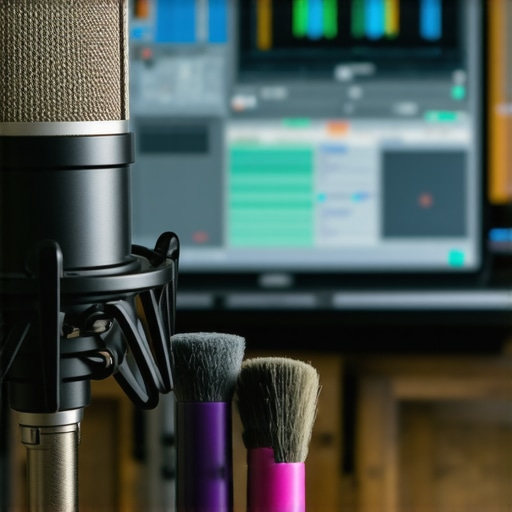
Image prompt: Close-up of a professional microphone with cleaning tools and a laptop displaying audio editing software, emphasizing maintenance routine.
Lessons from My Mic Mishaps That No One Tells You
One of the toughest lessons I learned was realizing that my choice of microphone setup directly impacted my workflow and final sound quality. I once spent months chasing the perfect pop filter placement, only to find out that room acoustics played a bigger role than gear. Similarly, I underestimated the importance of proper gain staging, which caused muddiness in my recordings despite having a top-tier microphone. These lightbulb moments taught me that mastering the environment and setup techniques is just as crucial as selecting the right gear.
Another insight is how vital patience and consistent maintenance are—routine checkups and cleaning prevented unexpected noise issues and prolonged the lifespan of my microphones. Lastly, I discovered that investing time in learning signal processing and EQ tailored to my voice made amateur recordings sound professional without heavy editing. The biggest takeaway? Don’t get blinded by the shiny gear—knowledge, environment, and technique are the real game-changers.
Tools and Resources That Elevated My Voice Quality in 2024
For anyone serious about upgrading their voice recording setup, I swear by a few resources. First, the comprehensive guide on microphone types helped me understand the nuances between USB and XLR options, ensuring I made an informed choice based on my needs. I also rely on the expert reviews of professional-grade XLR microphones, which have consistently pointed me to gear that combines durability and clarity. Lastly, the top USB microphones list has been invaluable for quick upgrades when I need high-quality sound on the fly. Trustworthy tools and well-curated guidance help me maintain a consistently excellent voice recording environment.
Your Next Step Toward Voice Recording Mastery
Remember, the journey to great voice recordings isn’t about luck or gear alone—it’s about continuous learning and paying attention to detail. If I can improve my sound quality by understanding my environment and techniques, so can you. Embrace the process, experiment with your setup, and don’t hesitate to seek out expert insights along the way. The future of voice recording holds exciting innovations, but mastery begins with you taking proactive steps today. Claim your voice, refine your environment, and watch your recordings soar to new heights.
What’s the biggest hurdle you’ve faced with your microphone setup? Share your story below—I’d love to hear how you’re working to improve your voice quality.
Reading this post really resonated with my own journey into voice recording. I used to think that simply investing in a high-end mic would solve all my issues, but I quickly learned that room acoustics and mic placement are just as crucial. I remember spending hours tweaking my pop filter and microphone angles, only to realize my space had so many echo problems that no gear could fix it alone. Since then, I’ve focused more on acoustic treatment—like adding foam panels and diffusers—which made a notable difference in clarity.
One challenge I still face is balancing gain levels—sometimes I get harsh sibilance or muffled sounds without fine-tuning correctly. Has anyone found effective ways to calibrate gain that works universally across different mics and environments? I’d love to hear any tips or workflows that helped you streamline your setup and improve your recordings without overcomplicating the process.
This post hits home for me, especially the part about environment and mic placement. I initially thought upgrading my mic was the first step, but I quickly realized how much room acoustics could sabotage even the best hardware. I started adding foam panels and experimenting with mic positioning—switching from a cardioid to a figure-8 pattern—and the improvement was noticeable. One thing I’ve found helpful is using a simple gain meter during recording sessions to avoid clipping or sibilance. It’s a quick visual cue to fine-tune levels more accurately than relying solely on ear judgment. Regarding gain calibration, I’ve learned that setting the gain in small increments and testing with different voice volumes helps establish a solid baseline—then adjusting with software EQ or filters can further refine the sound. Do you have any go-to settings or tools for quick gain adjustments in different environments? I’d be curious to hear how others manage this aspect seamlessly.